
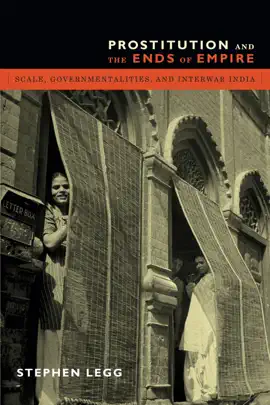
Officially confined to red-light districts, brothels in British India were tolerated until the 1920s. Yet, by this time, prostitution reform campaigns led by Indian, imperial, and international bodies were combining the social scientific insights of sexology and hygiene with the moral condemnations of sexual slavery and human trafficking. These reformers identified the brothel as exacerbating rather than containing “corrupting prostitutes” and the threat of venereal diseases, and therefore encouraged the suppression of brothels rather than their urban segregation. In this book, Stephen Legg tracks the complex spatial politics surrounding brothels in the interwar period at multiple scales, including the local, regional, national, imperial, and global. Campaigns and state policies against brothels did not just operate at different scales but made scales themselves, forging new urban, provincial, colonial, and international formations. In so doing, they also remade the boundary between the state and the social, through which the prostitute was, Legg concludes, “civilly abandoned.”

Explore Prostitution and the Ends of Empire by Stephen Legg on eBooksStore by Arnlweb. Discover book details, reader ratings, reviews, release information, genres, and related digital books available through the iTunes Store.
This book is part of our growing collection of bestselling eBooks, popular digital reading materials, and trending author releases. Readers can explore similar books, discover new authors, and browse related genres including fiction, romance, mystery, fantasy, business, self-help, educational books, and more.
Our platform helps readers discover highly rated digital books optimized for smartphones, tablets, laptops, and desktop devices. Browse fast-loading book pages, reader reviews, and popular recommendations from bestselling authors worldwide.