

This book is divided into four parts. The first part, Preliminaries, begins by introducing the basic theme of the book. It provides an overview of the current status of water resources utilization, the likely scenario of future demands, and advantages and disadvantages of systems techniques. An understanding of how the hydrological data are measured and processed is important before undertaking any analysis. The discussion is extended to emerging techniques, such as Remote Sensing, GIS, Artificial Neural Networks, and Expert Systems. The statistical tools for data analysis including commonly used probability distributions, parameter estimation, regression and correlation, frequency analysis, and time-series analysis are discussed in a separate chapter.
Part 2 Decision Making, is a bouquet of techniques organized in 4 chapters. After discussing optimization and simulation, the techniques of economic analysis are covered. Recently, environmental and social aspects, and rehabilitation and resettlement of project-affected people have come to occupy a central stage in water resources management and any good book is incomplete unless these topics are adequately covered. The concept of rational decision making along with risk, reliability, and uncertainty aspects form subject matter of a chapter. With these analytical tools, the practitioner is well equipped to take a rational decision for water resources utilization.
Part 3 deals with Water Resources Planning and Development. This part discusses the concepts of planning, the planning process, integrated planning, public involvement, and reservoir sizing.
The last part focuses on Systems Operation and Management. After a resource is developed, it is essential to manage it in the best possible way. Many dams around the world are losing some storage capacity every year due to sedimentation and therefore, the assessment and management of reservoir sedimentation is described in details. No analysis of water resources systems is complete without consideration of water quality. A river basin is the natural unit in which water occurs. The final chapter discusses various issues related to holistic management of a river basin.
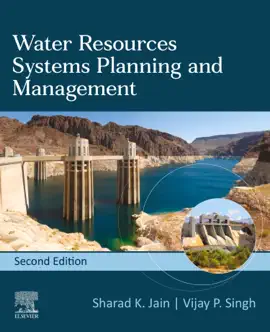
Explore Water Resources Systems Planning and Management by Sharad K. Jain & V.P. Singh on eBooksStore by Arnlweb. Discover book details, reader ratings, reviews, release information, genres, and related digital books available through the iTunes Store.
This book is part of our growing collection of bestselling eBooks, popular digital reading materials, and trending author releases. Readers can explore similar books, discover new authors, and browse related genres including fiction, romance, mystery, fantasy, business, self-help, educational books, and more.
Our platform helps readers discover highly rated digital books optimized for smartphones, tablets, laptops, and desktop devices. Browse fast-loading book pages, reader reviews, and popular recommendations from bestselling authors worldwide.