

This carefully crafted ebook: “The Invisible Hand of the Market: The Theory of Moral Sentiments + The Wealth of Nations (2 Pioneering Studies of Capitalism)” is formatted for your eReader with a functional and detailed table of contents.
The invisible hand of the market is a metaphor conceived by Adam Smith to describe the self-regulating behavior of the marketplace. The exact phrase is used just three times in Smith's writings, but has come to capture his important claim that individuals' efforts to maximize their own gains in a free market benefits society, even if the ambitious have no benevolent intentions. Smith came up with the two meanings of the phrase from Richard Cantillon who developed both economic applications in his model of the isolated estate. He first introduced the concept in The Theory of Moral Sentiments, written in 1759. In this work, however, the idea of the market is not discussed, and the word "capitalism" is never used. By the time he wrote The Wealth of Nations in 1776, Smith had studied the economic models of the French Physiocrats for many years, and in this work the invisible hand is more directly linked to the concept of the market: specifically that it is competition between buyers and sellers that channels the profit motive of individuals on both sides of the transaction such that improved products are produced and at lower costs. This process whereby competition channels ambition toward socially desirable ends comes out most clearly in The Wealth of Nations, Book I, Chapter 7. The idea of markets automatically channeling self-interest toward socially desirable ends is a central justification for the laissez-faire economic philosophy, which lies behind neoclassical economics. In this sense, the central disagreement between economic ideologies can be viewed as a disagreement about how powerful the "invisible hand" is.



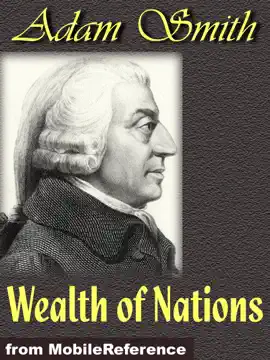

![An inquiry into the nature and causes of the wealth of nations: By Adam Smith, ... In two volumes. ... [pt.1]](https://is1-ssl.mzstatic.com/image/thumb/Publication/8b/f4/87/mzi.kchjaxwx.jpg/270x0w.webp)



![An inquiry into the nature and causes of the wealth of nations: By Adam Smith, ... In two volumes. ... [pt.2]](https://is1-ssl.mzstatic.com/image/thumb/Publication/b9/3f/85/mzi.hzlaiumf.jpg/270x0w.webp)















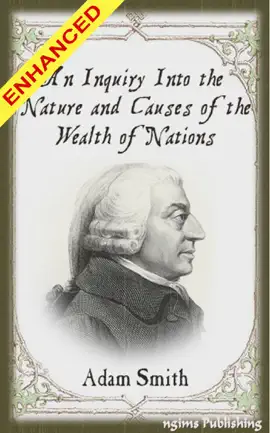











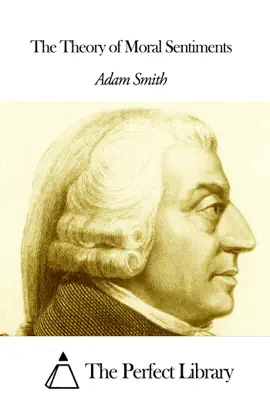


Explore The Invisible Hand of the Market: The Theory of Moral Sentiments + The Wealth of Nations (2 Pioneering Studies of Capitalism) by Adam Smith on eBooksStore by Arnlweb. Discover book details, reader ratings, reviews, release information, genres, and related digital books available through the iTunes Store.
This book is part of our growing collection of bestselling eBooks, popular digital reading materials, and trending author releases. Readers can explore similar books, discover new authors, and browse related genres including fiction, romance, mystery, fantasy, business, self-help, educational books, and more.
Our platform helps readers discover highly rated digital books optimized for smartphones, tablets, laptops, and desktop devices. Browse fast-loading book pages, reader reviews, and popular recommendations from bestselling authors worldwide.