

"Is there such a thing as a moral truth taught by nature itself and independent of ecclesiastical, political, and every other kind of social authority? Is there a moral law that is natural in the sense of being universally and incontestably valid—valid for men at all places and all times, indeed valid for any being that thinks and feels—and are we capable of knowing that there is such a law? ... My own answer is emphatically affirmative." —Franz Brentano, The Origin of Our Knowledge of Right and Wrong
Franz Brentano is one of the founding figures of twentieth century philosophy, celebrated for introducing the concept of intentionality as well as making significant contributions to ethics, philosophy of psychology and logic. He counted Sigmund Freud, Rudolf Steiner and Edmund Husserl amongst his students, and Freud wrote to his teacher to express his great admiration for him.
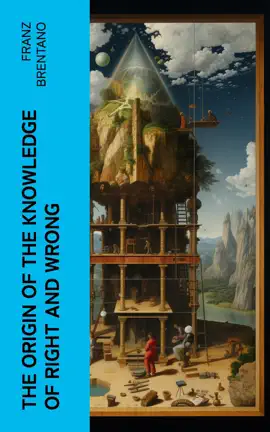
The Origin of Our Knowledge of Right and Wrong is Brentano's most important book on ethics and moral philosophy. Hailed by the Cambridge philosopher G.E. Moore as 'a far better discussion of the most fundamental principles of Ethics than any others with which I am acquainted', it is based on an important lecture Brentano delivered in Vienna in 1889 and the product of many years of reflection on its subject matter. Breaking with earlier arguments that ideas of right and wrong are innate, Brentano seeks to overcome a major challenge: if there is no such thing as objective moral goodness, can our moral judgments themselves still be objective, independent of context or human conventions? Brentano's answer is that they can, but only if we understand correctly the function of moral thought and discourse. His bold and highly original insight is that emotions are a precondition for moral knowledge and our experience of them can be right or wrong: if it is correct or fitting to love something we can say it is good, and if it is fitting to hate it, it is bad.
Moving deftly through key figures in the history of philosophy, including Descartes and John Stuart Mill, The Origin of Our Knowledge of Right and Wrong is a pioneering work of ethics that continues to influence both analytical and phenomenological traditions in philosophy.
This Routledge Classics edition includes a helpful account of Brentano's life and major works and a Foreword, both by Uriah Kriegel, explaining some of Brentano’s core ideas and arguments. Also included are a significant excerpt from Brentano's The Foundation and Construction of Ethics, and a historically important review by G.E. Moore of The Origin of Our Knowledge of Right and Wrong on the book's first publication.



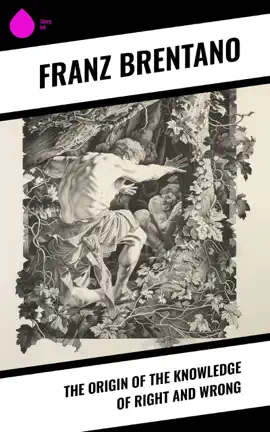




Explore The Origin of Our Knowledge of Right and Wrong by Franz Brentano on eBooksStore by Arnlweb. Discover book details, reader ratings, reviews, release information, genres, and related digital books available through the iTunes Store.
This book is part of our growing collection of bestselling eBooks, popular digital reading materials, and trending author releases. Readers can explore similar books, discover new authors, and browse related genres including fiction, romance, mystery, fantasy, business, self-help, educational books, and more.
Our platform helps readers discover highly rated digital books optimized for smartphones, tablets, laptops, and desktop devices. Browse fast-loading book pages, reader reviews, and popular recommendations from bestselling authors worldwide.