
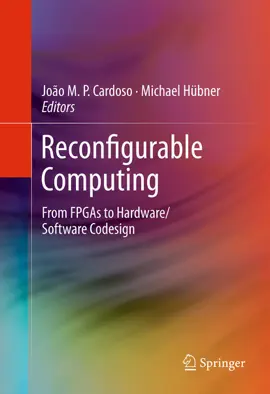
As the complexity of modern embedded systems increases, it becomes less practical to design monolithic processing platforms. As a result, reconfigurable computing is being adopted widely for more flexible design. Reconfigurable Computers offer the spatial parallelism and fine-grained customizability of application-specific circuits with the postfabrication programmability of software. To make the most of this unique combination of performance and flexibility, designers need to be aware of both hardware and software issues. FPGA users must think not only about the gates needed to perform a computation but also about the software flow that supports the design process. The goal of this book is to help designers become comfortable with these issues, and thus be able to exploit the vast opportunities possible with reconfigurable logic.
Focuses on both hardware and software systems
Treats FPGAs as computing vehicles rather than glue-logic or ASIC substitutes
Assembles broad set of models for exploiting FPGA parallelism
Demonstrates how to use and manage reconfiguration
Provides broad set of case studies demonstrating how to use FPGAs in novel and efficient ways
Explore Reconfigurable Computing by Joao Cardoso & Michael Hübner on eBooksStore by Arnlweb. Discover book details, reader ratings, reviews, release information, genres, and related digital books available through the iTunes Store.
This book is part of our growing collection of bestselling eBooks, popular digital reading materials, and trending author releases. Readers can explore similar books, discover new authors, and browse related genres including fiction, romance, mystery, fantasy, business, self-help, educational books, and more.
Our platform helps readers discover highly rated digital books optimized for smartphones, tablets, laptops, and desktop devices. Browse fast-loading book pages, reader reviews, and popular recommendations from bestselling authors worldwide.