
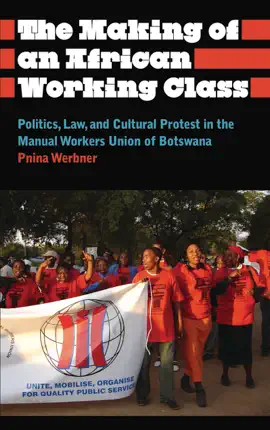
It is now 50 years since E.P. Thompson published his classic, The Making of the English Working Class. The Making of an African Working Class follows Thompson in exploring the formation of working class identity among low-paid African workers. In arguing for a radical public anthropology of worker identity, the book seeks to analyse the cultural, legal, ideological and experiential dimensions of labour activism often neglected in other labour studies.
Pnina Werbner shows that by fusing cosmopolitan and local popular cultural forms of protest, unionists have created a distinctive, vernacular way of being a worker in Botswana: one that does not deny workers' roots at home or in the countryside, while being cognisant of a wider world of cosmopolitan labour rights. The assertion of working class dignity, honour and respect, Pnina argues, is a powerful motivating force for manual workers.
Against legal-sceptical approaches, The Making of an African Working Class argues that in challenging the government - their employer - in court, manual workers' protests and mobilisation are deeply embedded in ethics, social justice and the law.



Explore The Making of an African Working Class by Pnina Werbner on eBooksStore by Arnlweb. Discover book details, reader ratings, reviews, release information, genres, and related digital books available through the iTunes Store.
This book is part of our growing collection of bestselling eBooks, popular digital reading materials, and trending author releases. Readers can explore similar books, discover new authors, and browse related genres including fiction, romance, mystery, fantasy, business, self-help, educational books, and more.
Our platform helps readers discover highly rated digital books optimized for smartphones, tablets, laptops, and desktop devices. Browse fast-loading book pages, reader reviews, and popular recommendations from bestselling authors worldwide.