
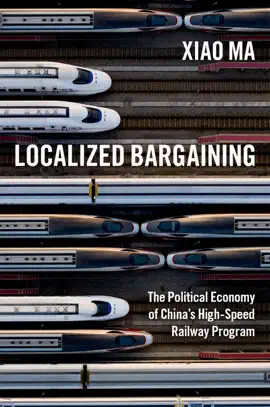
Looks at the rollout of one of the largest infrastructure programs in human history to show how local governments play a complex role. China's high-speed railway network is one of the largest infrastructure programs in human history. Despite global media coverage, we know very little about the political process that led the government to invest in the railway program and the reasons for the striking regional and temporal variation in such investments. In Localized Bargaining, Xiao Ma offers a novel theory of intergovernmental bargaining that explains the unfolding of China's unprecedented high-speed railway program. Drawing on a wealth of in-depth interviews, original data sets, and surveys with local officials, Ma details how the bottom-up bargaining efforts by territorial authorities—whom the central bureaucracies rely on to implement various infrastructure projects—shaped the allocation of investment in the railway system. Demonstrating how localities of different types invoke institutional and extra-institutional sources of bargaining power in their competition for railway stations, Ma sheds new light on how the nation's massive bureaucracy actually functions.

Explore Localized Bargaining by Xiao Ma on eBooksStore by Arnlweb. Discover book details, reader ratings, reviews, release information, genres, and related digital books available through the iTunes Store.
This book is part of our growing collection of bestselling eBooks, popular digital reading materials, and trending author releases. Readers can explore similar books, discover new authors, and browse related genres including fiction, romance, mystery, fantasy, business, self-help, educational books, and more.
Our platform helps readers discover highly rated digital books optimized for smartphones, tablets, laptops, and desktop devices. Browse fast-loading book pages, reader reviews, and popular recommendations from bestselling authors worldwide.