
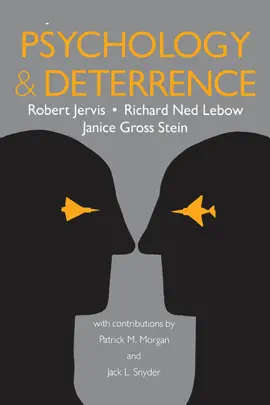
Detterence is the most basic concept in American foreign policy today. But past practice indicates it often fails to work - and may increase the risk of war. Psychology and Deterrence reveals this stratgy's hidden and generally simplistic assumptions about the nature of power and aggression, threat and response, and calculation and behavior in the international arena.
Most current analysis, the authors, note, ignore decisionmakers' emotions, preceptions, and domestic political needs, assuming instead that people repond to crisis in highly rational ways. Examining the historical evidence from a psychological perspective, Psychology and Deterrence offers case studies on the origins of World War I, the 1973 Arab-Israeli conflict, and the Falklands Wars as seen by the most important participants.
These case studies reveal national leaders to be both more cautious and more reckless than theory would predict. They also show how deterrence strategies often backfire by aggravating a nation's sense of insequrity, thereby calling forth the very behavior they seek to prevent. The authors' conclusions offer important insights for superpower bargaining and nuclear deterrence.






Explore Psychology and Deterrence by Robert Jervis, Richard Ned Lebow & Janice Gross Stein on eBooksStore by Arnlweb. Discover book details, reader ratings, reviews, release information, genres, and related digital books available through the iTunes Store.
This book is part of our growing collection of bestselling eBooks, popular digital reading materials, and trending author releases. Readers can explore similar books, discover new authors, and browse related genres including fiction, romance, mystery, fantasy, business, self-help, educational books, and more.
Our platform helps readers discover highly rated digital books optimized for smartphones, tablets, laptops, and desktop devices. Browse fast-loading book pages, reader reviews, and popular recommendations from bestselling authors worldwide.