
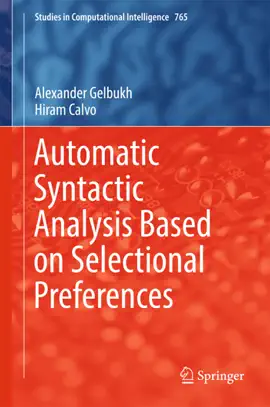
This book describes effective methods for automatically analyzing a sentence, based on the syntactic and semantic characteristics of the elements that form it. To tackle ambiguities, the authors use selectional preferences (SP), which measure how well two words fit together semantically in a sentence. Today, many disciplines require automatic text analysis based on the syntactic and semantic characteristics of language and as such several techniques for parsing sentences have been proposed. Which is better? In this book the authors begin with simple heuristics before moving on to more complex methods that identify nouns and verbs and then aggregate modifiers, and lastly discuss methods that can handle complex subordinate and relative clauses. During this process, several ambiguities arise. SP are commonly determined on the basis of the association between a pair of words. However, in many cases, SP depend on more words. For example, something (such as grass) may be edible, depending on who is eating it (a cow?). Moreover, things such as popcorn are usually eaten at the movies, and not in a restaurant. The authors deal with these phenomena from different points of view.




Explore Automatic Syntactic Analysis Based on Selectional Preferences by Alexander Gelbukh & Hiram Calvo on eBooksStore by Arnlweb. Discover book details, reader ratings, reviews, release information, genres, and related digital books available through the iTunes Store.
This book is part of our growing collection of bestselling eBooks, popular digital reading materials, and trending author releases. Readers can explore similar books, discover new authors, and browse related genres including fiction, romance, mystery, fantasy, business, self-help, educational books, and more.
Our platform helps readers discover highly rated digital books optimized for smartphones, tablets, laptops, and desktop devices. Browse fast-loading book pages, reader reviews, and popular recommendations from bestselling authors worldwide.