

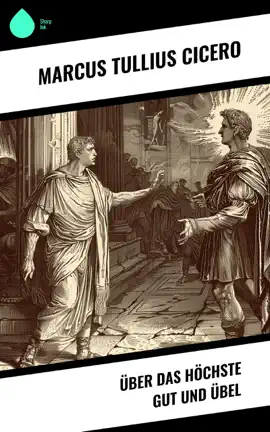
Marcus Tullius Cicero, the greatest orator in Roman history, left behind a remarkable collection of letters, philosophical treatises, and orations.
His works run to many volumes, an output that is the more astonishing when one reflects how much has been lost forever.
In 1345, in the Library at Verona, Petrarch discovered a manuscript containing the letters written by Cicero to his friend Atticus (‘Ad Atticum’), his brother Quintus (‘Ad Quintum Fratrem’) and Caesar’s assassin, Marcus Brutus (‘Ad M. Brutum’).
Lost for centuries, the letters fascinated Petrarch, providing him with a moment of first contact not unlike that of Howard Carter peering into Tutankhamen’s tomb.
Petrarch reacted enthusiastically to the Cicero he met in these letters, writing a letter to his long-dead hero in which he recorded his impression of having suddenly been given access to his actual voice: ‘I heard you saying many things, lamenting many things.’
Yet the ‘many things’ Petrarch heard were also a shock to him and to the traditional view of Cicero. Instead of the high-minded sage Petrarch thought he knew, occupied in transcribing Greek philosophy during his last years of retirement, he discovered in this mass of diverse correspondence a frenziedly engaged politician, trimming and adjusting under the pressure of rapidly shifting circumstances.
A chronicle of a crumbling civilization during the era when the republic disintegrated and was replaced by despotism, his Letters portray a world dominated by characters who have since acquired almost mythic status: Pompey, Caesar, Brutus, Cassius, and Mark Antony.
Whether describing the vagaries of war, the collapse of Roman society, his beloved republic, or his own personal domestic dramas, Cicero’s letters reflect the complex personality of an honorable man.
However overwhelmed he was by his misfortunes or his private grievances, Cicero always tried to act for the public good; and if these letters reveal the intensity of his ambition they also reveal the depth of his love of his country.
MARCUS TULLIUS CICERO (106-43 BC) was an orator, statesman, philosopher and writer, who rose in Rome in the turbulent last years of its republican government. He is considered one of Rome's greatest orators and prose stylists.























Explore The Letters of Cicero by Marcus Tullius Cicero & Philip Dossick on eBooksStore by Arnlweb. Discover book details, reader ratings, reviews, release information, genres, and related digital books available through the iTunes Store.
This book is part of our growing collection of bestselling eBooks, popular digital reading materials, and trending author releases. Readers can explore similar books, discover new authors, and browse related genres including fiction, romance, mystery, fantasy, business, self-help, educational books, and more.
Our platform helps readers discover highly rated digital books optimized for smartphones, tablets, laptops, and desktop devices. Browse fast-loading book pages, reader reviews, and popular recommendations from bestselling authors worldwide.